Grief is messy, complicated, and hardly a predictable cycle. For children and teens, navigating grief and growing up at the same time is a unique grief experience. Sure, there are nonfiction books about grief to guide kids and teens, but sometimes storytelling is better medicine.
No one story of grief is the same, which is why it is important to have options when finding books on grief. I have five middle grade and young adult book picks as a good starting place.
Keep an eye out for more choices to appear in the future. This list is updated as of 1/25/2022.
The Grief Keeper by Alexandra Villasante
A speculative fiction young adult book that juggles internalized racism, grief, and traumatic experiences through a unique immigration narrative. The protagonist Marisol attempts to seek asylum in the U.S. for both her and her sister following the death of her brother. In exchange for safety, Marisol agrees to become a “grief keeper”, an experimental program where the trauma of others is transferred into another person’s body. Marisol also meets Rey, an American girl who grapples with the loss of her twin brother. For more about this pick, check out my book review from 2021.
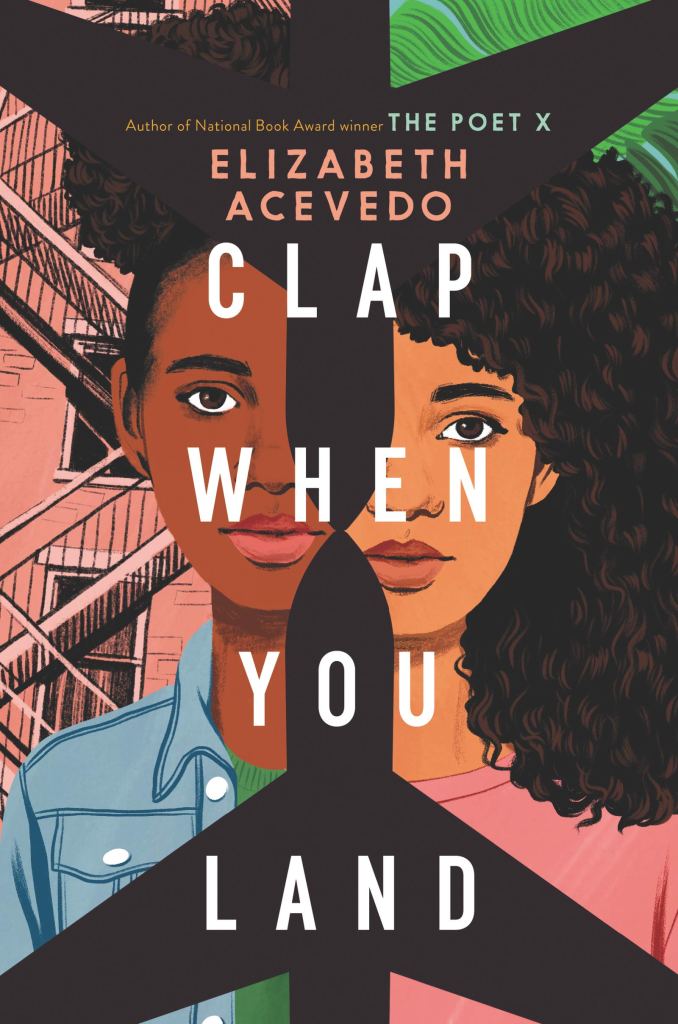
Clap When You Land by Elizabeth Acevedo
Brought together by their father’s death in a plane crash, two sisters must not only grapple with the grief of losing a father, but the realization that their father lived a double life. Feelings of grief and betrayal mash together for a stunning YA novel. For more about this pick, I wrote a review of it back in August of 2021.
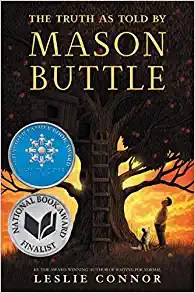
The Truth as Told by Mason Buttle by Leslie Connor
I had the opportunity to listen to this book as an audiobook, and wow. What a wonderful book from the perspective of a boy juggling grief over a friend’s death, a learning disability, bullying, and judgement from his community over a suspected murder. Mason is a charming, positive character, and while the book doesn’t shy away from his hardships, the story demonstrates how grief is a day-by-day process with small improvements and setbacks along the way.
The Thing About Jellyfish by Ali Benjamin
A unique blend of realistic fiction and science writing, The Thing About Jellyfish explores the difficulty of facing death by sudden and tragic circumstances…especially when a last interaction with the person didn’t go positively. Suzy grapples with how her friend, a strong swimmer, could have accidently drowned. Convinced her friend was the victim of a jellyfish sting, she sets out to find the real answers, even when there doesn’t seem to be any.
Long Way Down by Jason Reynolds
After the death of his older brother Shawn, Will is determined to make things right according to “The Rules”. But he spends the next 60 seconds in an elevator with the ghosts of his past, rethinking everything he ever knew.
[SPOILERS AHEAD]
What I adore about this book, as well as so many of my students, is the exploration of generational trauma. The majority of Will’s family members were killed by gun violence, therefore Will feels obligated to keep the tradition of “The Rules”, or killing the person believed to have murdered your loved one. Deciding to avenge Shawn’s death, Will gets on the elevator in his apartment complex. One by one, floor by floor, his dead family and friends reveal secrets to him in the confines of the elevator.
Further Resources on Navigating Child and Teen Grief
Here are some helpful websites and resources for grief tools. Check your local community for grief counseling groups or individualized therapy.
It’s tough to believe that 20 years have passed since 9/11. Even as a young child I can remember the fear and chaos from that day, even if I didn’t fully understand it myself. It was one of the first instances I can remember of the adults in my life being uncertain about what was happening and what would happen next. What’s even tougher to believe is that I now teach students who weren’t even born when 9/11 happened.
It can be hard for me personally to know what to say or how to describe what it was like that day. I was nearly six years old and only knew that things were terrifying and I couldn’t go to cheerleading practice. So I tell students if they ask or if it relevant to class discussions what it was like to remember the switch from feeling safe to feeling incredibly unsafe in a day. The entire world shifted. Now, I’m old enough to see major historical events I witnessed as a child in updated textbooks and as something considered as “historical fiction”, even though I still think 2001 was “just a decade ago”.
Plenty of media has been made in the last 20 years, but it has gotten easier to find more children’s and YA literature on 9/11. If you’re a teacher, a parent, or even a kid or teen looking for accurate, well-written books that explain what happened during 9/11, I’ve found several that could work in your favor.
Keep in mind that due to recent events in Afghanistan, there may be even tougher conversations about 9/11 and the U.S.’s involvement in the War on Afghanistan. Some of these books also have Afghani perspectives on having Americans in their country, but the majority of them focus on a more U.S. perspective. Other teachers have paired works by Malala Yousafzai or Khaled Hosseini to give a sense of how the war impacted civilians.
No matter how you use these books, they are certain to generate a valuable discussion.
How Kid’s Books About 9/11 Helps Their Understanding of the Event
Stories from their relatives or teachers give them a glimpse of what occurred as well as what they learn in their history classes. However, English Language Arts teachers know that books can open new pathways to productive dialogue and learning. Having characters their own age speak about their perspectives is a lot easier to understand than a documentary. When I assigned Refugee by Alan Gratz as a choice for a coming-of-age unit, a lot of students said how reading the stories of the three kids from each time period helped them better understand what was happening and why they had to flee their respective countries. Making history relevant to kids means giving them relevant experiences. And though most of us know why 9/11 is relevant and still impacts us today, those who were too young to remember it or weren’t even born yet need something to connect with that they can understand for the best impact.
Some of my favorite choices I’ve read or taught in some capacity are listed down below along with their advantages and limitations.
Ground Zero by Alan Gratz
I find Gratz’s books to be some of the most accessible historical fiction books for kids of many ages. Though the target audience tends to be around late elementary and early middle school, many of my high school students enjoy them as well. I will admit that sometimes they can have cheesy moments or oddly-phrased sentences that are meant to clue kids in on what is going on, but it’s nothing that takes away from the main focus of what happened and what the characters have to do to survive.
Ground Zero is one of Gratz’s newer books and takes place both during 9/11 as well as years ahead into the War in Afghanistan. The main characters include Brandon, a nine year-old boy who goes to work with his father in the trade center, and Reshmina, an Afghani girl whose family harbors an American solider named Taz. While Brandon fights for his life in the World Trade Center, Reshmina fights against her brother’s wishes to join the Taliban while hoping for a better world.
I won’t go into spoiler territory, though I will say that Gratz presents both characters fairly in their actions and why they choose to do what they do throughout the book.
Nine, Ten: A September 11 Story by Nora Raleigh Baskin
Unlike the other books I’ve mentioned, this middle grade level story tells the perspective of four different kids in different parts of the U.S. on the days leading up to 9/11. Each character has a unique story and why they are at different airports, but their stories are meant to weave together.
The ending was definitely appropriate for late elementary to early middle schoolers, enphasizing kindness towards everyone. This was put in contrast with the Islamaphobia towards one of the characters and their family in the book. But you’ll have to read it for yourself to know.
In the Shadow of the Fallen Towers: The Seconds, Minutes, Hours, Days, Weeks, Months, and Years after the 9/11 Attacks by Don Brown
Don Brown has a talent for breaking down historical events for readers to understand while also including a ton of relevant, reliable sources to bring the story together. He is probably best known for his graphic novel Drowned City: Hurricane Katrina and New Orleans, which captures the tragic events of Hurricane Katrina and its aftermath in Louisiana. In the Shadow of the Fallen Towers accomplishes an empathetic, truthful narrative of what happened that day in New York, Pennsylvania, and Virginia. It is short, but concisely reports the information with brilliant illustrations.
The only major downside is that the title is slightly misleading, as it spans just one year after the attacks and acknowledges events — such as the assassination of Osama bin Laden — in the notes at the end of the book.
Brown also wrote a graphic novel for the Actual Times series called America is Under Attack: September 11th, 2001: The Day the Towers Fell that is similar, but there is a much more personal feel to his latest book. For one thing, it begins from the perspective of a man who is there to film a documentary on FDNY and like Brown’s other books, follows a path of survivor’s statements. It does a wonderful job of showing just why America was angry while also acknowledging and condemning the rampant Islamaphobia in the aftermath. It also ends on a note of hope, which we can all use a little bit more of, right?
I Survived: The Attacks of September 11th, 2001 by Lauren Tarshis
One of many in the best-selling I Survived series, this book is perfect for elementary-aged kids or for older kids that like fast-paced and action-packed books. Recently, it has been adapted into graphic novel form. Both tell the story of Lucas, a boy who loves football and looks up to his father and Uncle Benny. Both his father and uncle are firefighters for the FDNY.
The book is honest about the events of 9/11 without, as one Amazon review put it, “sugarcoating” anything.
Other Teaching Materials to Pair with the Books
One or two books alone can do wonders, but giving kids the chance to see other sources to match the stories they are reading helps reenforce the knowledge they’ve learned.
Clap When You Land is a stunning novel-in-verse following two half sisters…who are completely unaware of each other. Well, unaware until their father dies in a plane crash. Then things get complicated.
Those complications make the grieving process significantly harder, though it does take a while for both of the sisters to realize that the other exists. Set in both the Dominican Republic and NYC, Camino and Yahaira Rios are both struck by the tragic loss of their Papi and the secrets he kept from both of his families.
The book explores many topics: grief, secrets, LGBTQ+ relationships, misogyny, colorism, poverty, and so much more. The contrast and parallels of both Camino and Yahaira’s lives make for a fascinating and exciting coming-of-age book.
I listened to the audiobook narrated by the author herself, which brought her novel even more to life and read as intended. Acevedo also does distinct voices for both sisters and includes vibrant imagery in each verse, particularly when it comes to describing the sisters’ relationships or fond memories of their father. I particularly liked the way Camino describes the spiritual healing work her Tía Solana does throughout the book and how she uses her own gifts to help her community.
As for Yahaira, her perspective is similar to the avergage American teen, but what I love about her perspective is that her story often refers to her girlfriend, who is a source of comfort for Yahaira. As she grapples with Papi’s secrets, her girlfriend is there as a steady support system. It’s nice to see a relationship in a YA book well-established and not as a “solution” to grief, but still supportive and key nonetheless. Yahaira also feels guilt throughout the book for her the recent strains on her relationship with Papi, particularly over her quitting chess. I think a lot of kids can relate to feeling pressured to continue doing something for their parents, even if they don’t like it or feeling guilt for not continuing it. This is especially true for Yahaira as she struggles with her identity, like in this quote:
“Can you be from a place you have never been?
You can find the island stamped all over me, but what would the island find if I was there?
Can you claim a home that does not know you, much less claim you as its own?”
From Clap When You Land by Elizabeth Acevedo
I keep revisiting many quotes from Clap When You Landbecause of their eloquent power, especially when it comes to Yahaira’s perspectives on how the world monetizes death or how Camino references saints and their ancient wisdom. There’s so much more I could gush about, but I’m too afraid to get into spoiler terroritory for the time being. If it wasn’t obvious, go read (or listen) to this book.
Fellow teachers, if you teach a coming-of-age unit, this is an excellent option for that as well.
In 2010, Google determined that 129,864,880 books exist on Earth. Think of how many more books exist 11 years later! Feeling dizzy just thinking about it? Thankfully, narrowing down the amount of books by your child’s interests and reading levels is much easier to do.
Still, it can be hard to know where to start. But I promise that while finding the right book for your child can be a long process, it’s not an impossible one. See some of my own techniques for finding books your kid can connect with and finally fall in love with reading.
Find books based on their favorite tv shows
One of the best things about children’s books is that there is probably a book adaptation or even extra stories created just for their favorite media. If your child loves everything to do with Disney, try some books from their Twisted Tales series. The books are retellings of their favorite stories in alternate universes.
Teens may love graphic novels or comic series that were the inspiration for shows such as The Umbrella Academy or Invincible. I’ve found that in recent years, manga has soared in popularity. Manga are graphic novels that are typically multi-volume and is often adapted into anime. While they can be pretty pricey per volume (to be fair, that’s a LOT of drawing to make just one book), the craze has inspired local libraries and other media services to have copies readily available with less wait time (and money saved for you!).
Listen to audiobooks together in the car
Look through descriptions of audiobooks through Audible, Libby, Overdrive, or Hoopla. Choose one that you believe you would like to listen to as a family. That way you can react to the book in real time while also having moments to talk about what you’re listening to. Remember to not force your way through listening to it if it doesn’t appeal to either of you, but especially for your child.
HEad to the library
Libraries are truly amazing places. Free Wi-Fi, classes, and other programs are all available to you and your community at no cost. Well, actually, some of your tax dollars, but hey, that’s all the more reason to go. You prepaid in advance, so take advantage of all it has to offer! Over a billion Americans do it each year, so you’ll be in good company.
When it comes to using the library to help find a good book for your kid, that’s what librarians are for! They have the latest knowledge on new releases and can recommend books for any kind of reader. You can also ask their teachers or school librarians for suggestions as well.
Read Kid Lit Blogs
“Kid Lit” is the affectionate term for children’s literature. They often have posts on the latest books, review of books, and so much more. Blogs by specific grade levels are listed below and I’ll add more as I find them. There’s always something new out there, so if you don’t find what you’re looking for with these blogs, keep checking!
I’ve mentioned before that it can be tough to find a book that resonates with some kids. Don’t be afraid to let kids read “below level” if they already have a hard time connecting with books. The more they read, the more words they know, the more books will be accessible to them when the time is right. I can guarantee you that if I didn’t have the foundation of plenty of chapter books, there is no way I would have enjoyed Jane Eyre when it was time to read it.







 Gretchen Gales