Self-Guided Writing Courses To Make You a Better Writer

There are plenty of reasons why self-guided writing courses work for so many writers. Busy, unpredictable schedules are just a fact of adult life. Some people prefer to learn in the comfort of their home or in a bustling cafe on a Sunday morning. Think of the Hermit, the introspective tarot figure that encourages you to look from within for the answers. No matter where you are in your writing journey, there are many options to supplement your education.

For me, self-guided writing courses provided me a space to learn even when I was bedridden from illness and bored or downright lazy. Visualize me in pajamas with a box of store brand tissues by my side, some tissues shoved up my nose, trying to write a poem in a tiny notebook, then you can believe that learning can be done under any circumstances.

Psst…if self-guided writing courses aren’t your jam or jelly, there’s plenty of other writing class options out there, including in-person, live Zoom, or interactive online courses with other participants. Check out ones that offer scholarships and discounts here.

Self-Guided Courses for Writers

LulLabies & Alarms

Elisabeth Blair offers writing classes and workshops that are self-paced through her website Lullabies & Alarms. Self-guided courses are offered on Wet Ink, the platform for creative writing courses. Right now, she is offering a course called “Our Liminal Minds: Writing from Our Own Galactic Outer Rims” that sounds…SO cool. For $100, you can go through the course at your own pace.

You must email her to register for the course.

Muse Writing & Creative Support

Run by Joanna Penn Cooper, Muse Writing & Creative Support offers several courses per season. On occasion, she’ll throw in a self-guided course through Wet Ink that writers can enjoy at their own pace. They often have great angles and themes, so there’s a direction beyond just your typical fiction or poetry workshop. I was a big fan of The Call: A Self-Guided Course on Creative Witness.

While it doesn’t seem like the site has any available right now, keep an eye out for more opportunities to join a self-guided writing course.

Poetry Barn

Poetry Barn has a barnyard full (yes, I had to) of poetry courses, including self-paced writing workshops. You can even filter the options for self-paced courses on the website. You can choose from topics such as Queer Poetics, 30 Poems in 30 Days, Journaling for Poets, and so much more. Click here to explore your options.

Be mindful when you type this into Google to not accidentally click on the Pottery Barn ads. You think I’m kidding. But I am not.

Hugo House

Hugo House offers a plethora of online and in-person courses for people around the world. Based in Seattle, this nonprofit has so many innovative courses to take and enjoy. With that said, there is only one asynchronous writing course, which is the Writer’s Welcome Kit. You can expect online workbooks, excel spreadsheets, and other resources to get started with your publishing journey.

DIY MFA

It is a truth universally acknowledged that MFAs can be competitive, expensive, time-consuming, heartbreaking, or all of the above. If you are fortunate enough to get into an MFA program that is fully-funded and have the time and means to pursue it, do it. But for many, these programs are difficult to get into or inaccessible for many people.

That’s where DIY MFA comes in. Both a book and a company/concept, DIY MFA runs on three main principles: write with focus, read with purpose, and build your community. While not a true “self-guided course,” the book is similar to this journey, including graduate-level techniques and skills you can use to boost your writing. The website has various articles and resources to focus on refining your craft. The Facebook group hosts events every Sunday evening for those who wish to attend, including curated sessions on certain poets, themes, and more.

If you decide to attend an MFA program later, you already have the skills and tools to upgrade your writing and be prepared for in-depth workshop time.

The Artist’s Way by Julia Cameron

Calling this a self-guided course is…bold. I know, I know. It’s more like an experience or a total mind flip. But when writing this blog, how can I NOT include the quintessential artist’s guide to transforming their art, writing, and way of being?

I’ve been seeing this book trending on TikTok even though it was originally published back in 1992. (Yes, that was over 30 years ago.) The verdict is in: it is one of the most influential books for your craft you could own. No matter your craft, any writer or artist can benefit from the gentle affirmations and exercises the book includes.

At the very least, you can take one of its most common and poignant practices: “Morning Pages.” I don’t know of any of my mentors who went a day without morning pages to spill their thoughts and ideas. Give it a try for a week and see how it changes your approach and practice.

Do you Loate Self-Guided Courses? Or JUst Looking for All of your options?

I get it. There are some times in my life when I need someone to be my accountabilibuddy. (Is that the spelling? It’s not a real word, but I’m still concerned.)

If you’re looking for a teacher in the Richmond, Virginia area or are cool with a virtual writing teacher to be your guide, I host many workshops with constructive critiques and personalized feedback from yours truly.

Head on over to my Events & Workshops page to see what I’m currently offering. If you don’t see anything you’d like, reach out to me and we can talk about 1:1 or private workshops for you or bigger groups.

Or if you just want to send me suggestions to add to this list, I’d love to hear from you.

Writer’s Craft: My Favorite Literary Journal Pieces I Read in January 2022

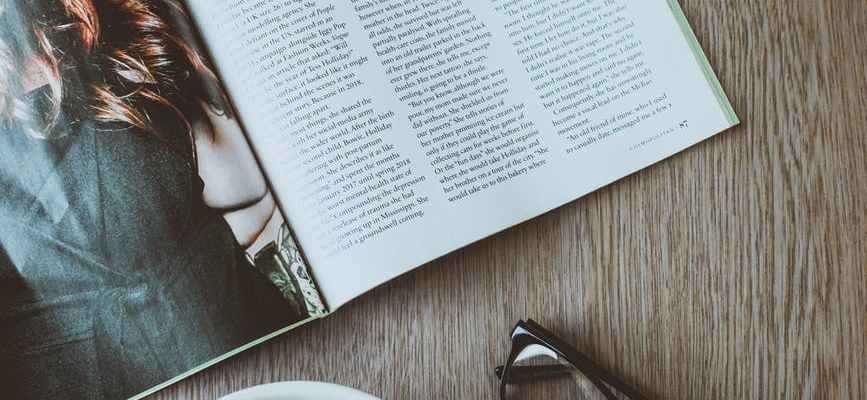
Magazine spread with a femme-presenting person on the left page and text on the right. A pair of black glasses is to the right and a bowl of fresh fruit is to the left.
Photo by Lisa Fotios on Pexels.com

It’s not only a good idea to write a lot in order to improve your writing. Being a writer means you have to be a reader, too. So I push myself to read as many books and literary magazines that I feasibly can, even if it ends up only being once piece from an issue or collection.

Keep in mind that just because I read it in 2022 doesn’t mean it was published in 2022 or even in a recent issue. My TBR pile knows no publication dates.

“Virgo Moon” by Kelsey Day (The Athena Review)

“Virgo Moon” caught my attention mostly because I’m a Virgo sun. Egotistical? It’s possible.

In 2021, I began writing poems based off of my daily horoscopes and other readings as a way to generate new poems. In this poem, I particularly admired how Day mixes algae and soap in a mason jar in the second stanza. To me, a lot of this reflects how those with Virgo placements have a need for cleanliness and order, while also honoring Appalachian culture. The power of the last stanza confronts the complicated nature of feeling lonely, even when surrounded by those who adore and love you. For these reasons and more, a PDF file of this poem will be saved in my “Poems I Like” folder in Google Drive.

“False Ancestry” by Yvanna Vien Tica (perhappened mag)

This one spoke to me as a teacher and how we need to always consider every student’s experience in the classroom. “False Ancestry” focuses on a family tree project in third grade, purposefully destroyed and forgotten by the speaker. Except that their history follows them, even at home where they are supposed to feel safe and comforted. The rest of the poem tells how the World War II unit textbook transformed into origami and hours spent in speech therapy and the pressure to assimilate to a culture not of their own. I think this poem would be great paired alongside Ocean Vuong’s On Earth We’re Briefly Gorgeous.

“Noisetalgia” by MArta špoljar (Lavender Bones Magazine, Issue One)

My little OCD heart connected heavily with this poem. “Noisetalgia” is not explicitly about compulsions or OCD tendencies, but the imagery reminds me so much of the pure panic you feel over things being out of place. In this case, it is a heartbreaking reminder of how trying to forget pain can morph into routines that demolish your sense of self-worth. Into the Google Drive folder you go, little poem.

Have suggestions of what I can read next? I’m always willing to check out new magazines and projects, so don’t be shy.

Books: Poetry Collections I Read for the 2021 Sealey Challenge

I’m not exaggerating when I say I only found out about the Sealey Challenge a day into August this year. With the amount of poetry books I’ve collected over the years from my alma mater’s book sales and various PDFs in my Google Drive, this was the perfect excuse to catch up on reading poetry.

While I couldn’t read a collection a day—actually, only three in total— I did want to show which books and chapbooks I was able to finally enjoy.

Xenos by Joanna C. Valente

Valente’s other collections have always been hauntingly beautiful, and this chapbook of the immigrant experience is no exception. I read Valente’s collection Marys of the Sea a few years ago, and I’ll always be stunned by their work.

(Agape Editions/Sundress Publications, 2016)

Jeanette Killed Her Husband (And Buried Him Off Of Shades of Death Road) by Robin Sinclair

If you’re like me and have an obsession with murder ballads and true crime, Sinclair’s collection from Ghost City Press is like reading a song by The Chicks. Yes, that’s a high tier compliment.

Similar songs that give the same vibes are “no body, no crime” by Taylor Swift and “Martha Divine” by Ashley McBryde. Basically any song about killing a cheating husband could easily make it on a playlist for this chap. Jeanette Killed Her Husband also loops in folklore and hometown legends, another common guilty pleasure of mine.

(Ghost City Press, 2020. )

A Song for PTSD by Sarah Lilius

This microchap was able to capture the pain and horrors of PTSD and lost girlhood in just a few poems. A Song for PTSD is one of many debut chaps from the press, which also has a magazine dedicated to centering disabled voices of all kinds. With lines like “Paranoia built in me like a bone” and “I can’t imagine that you bleed like a human”, it’s hard to not want more of Lilius’ sharp verses. Thankfully, this is just one of her five chaps, so I’ll have more material to dive into when the time comes.

(Blanket Sea Press, 2021)

Hopefully next year I’ll be able to be more faithful to my goal.

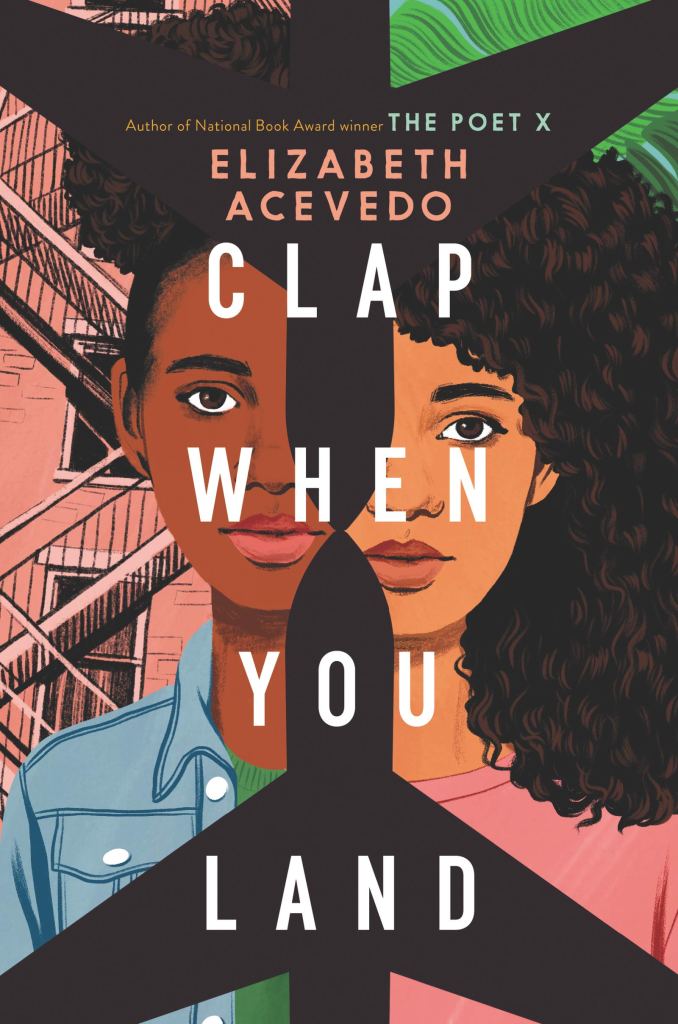
YA Book Review: Clap When You Land by Elizabeth Acevedo

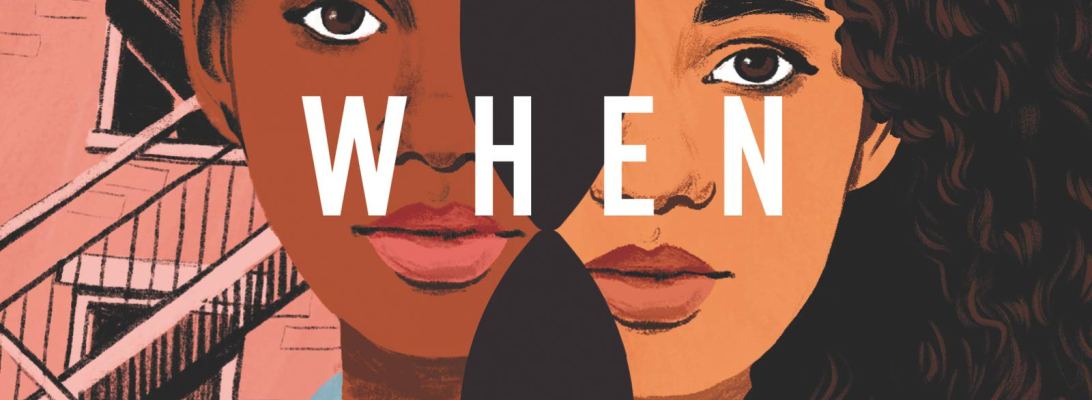
Image Courtesy of HarperCollins

Clap When You Land is a stunning novel-in-verse following two half sisters…who are completely unaware of each other. Well, unaware until their father dies in a plane crash. Then things get complicated.

Those complications make the grieving process significantly harder, though it does take a while for both of the sisters to realize that the other exists. Set in both the Dominican Republic and NYC, Camino and Yahaira Rios are both struck by the tragic loss of their Papi and the secrets he kept from both of his families.

The book explores many topics: grief, secrets, LGBTQ+ relationships, misogyny, colorism, poverty, and so much more. The contrast and parallels of both Camino and Yahaira’s lives make for a fascinating and exciting coming-of-age book.

I listened to the audiobook narrated by the author herself, which brought her novel even more to life and read as intended. Acevedo also does distinct voices for both sisters and includes vibrant imagery in each verse, particularly when it comes to describing the sisters’ relationships or fond memories of their father. I particularly liked the way Camino describes the spiritual healing work her Tía Solana does throughout the book and how she uses her own gifts to help her community.

As for Yahaira, her perspective is similar to the avergage American teen, but what I love about her perspective is that her story often refers to her girlfriend, who is a source of comfort for Yahaira. As she grapples with Papi’s secrets, her girlfriend is there as a steady support system. It’s nice to see a relationship in a YA book well-established and not as a “solution” to grief, but still supportive and key nonetheless. Yahaira also feels guilt throughout the book for her the recent strains on her relationship with Papi, particularly over her quitting chess. I think a lot of kids can relate to feeling pressured to continue doing something for their parents, even if they don’t like it or feeling guilt for not continuing it. This is especially true for Yahaira as she struggles with her identity, like in this quote:

“Can you be from a place
you have never been?

You can find the island stamped all over me,
but what would the island find if I was there?

Can you claim a home that does not know you,
much less claim you as its own?”

From Clap When You Land by Elizabeth Acevedo

I keep revisiting many quotes from Clap When You Land because of their eloquent power, especially when it comes to Yahaira’s perspectives on how the world monetizes death or how Camino references saints and their ancient wisdom. There’s so much more I could gush about, but I’m too afraid to get into spoiler terroritory for the time being. If it wasn’t obvious, go read (or listen) to this book.

Fellow teachers, if you teach a coming-of-age unit, this is an excellent option for that as well.