5 Book Series for Kids Who Hate Reading

Photo by Kindel Media on Pexels.com

Throughout several decades, the world has seen a decline in the number of children reading for fun. As a matter of fact, the amount of kids reading for pleasure has fallen to their lowest since the 1980’s. In a survey conducted by the National Assessment of Educational Progress, children ages 9 to 13 were asked about their reading habits, particularly if they enjoyed reading for fun. 42 percent of 9 year-olds said they read for fun almost daily, but this is down from 53 percent in 2012. For 13 year-olds, only 17 percent reported they read for fun daily, a sharp decline from the 27 percent in 2012. While the study for 17 year-olds was unable to be conducted due to the pandemic, it isn’t hard to imagine that many kids’ reading habits have declined over the years.

The pandemic has made everyone’s concentration and mental health decline, the decline we are seeing in children is particularly worrisome. Besides the “learning-gap” caused by the abnormal years, kids are missing out on developing essential skills. Reading fiction alone has been proven to enhance a person’s social cognition abilities, or the part of the brain responsible for interpreting feelings.

Finding books for your kids to read can be tough, but not impossible. It normally comes down to having your kids pick their own books and finding suggestions of popular book series many kids easily relate to. The books in my list are a great starting place, as many of these series were books that interest my own students or even some of my closest friends growing up.

Diary of A Wimpy Kid Series by Jeff Kinney

Despite being so close to adulthood, so many of my reluctant high school readers will fight over who gets which Wimpy Kid book next. The series, with over 250 million books sold to kids of all ages, follows Greg Heffley and his hilarious misadventures as an every day kid. The series is targeted at ages 8 through 12, but anyone can relate to the struggles relating to family, friends, and changes happening during those dreaded middle school years.

The books also include illustrations to demonstrate Greg’s various predicaments. Never underestimate the power of a few black-and-white illustrations to get students interested in the material.

If your child or students have already gone through all of the Wimpy Kid books, Kinney has also written a spin-off series with Rowley Jefferson, one of Greg’s friends. The Awesome Friendly Kid series is still humorous, but with Rowley’s more wholesome, if not naïve, perspective.

The first three books have been turned into movies, so make it an incentive to watch the movie after reading the books to see all of the differences.

Big Nate by Lincoln Pierce

If your kids or students have already gone through every Wimpy Kid book, Big Nate has another middle school protagonist just trying to survive his “tweenage” years. These books are mostly made up of comic strips of Nate’s adventures at school, so it is more of a comics collection than a traditional book. Even so, these books helped inspire the Wimpy Kid books, so you know they’re doing something right.

There are now books with words and pictures in the style of the Wimpy Kid books for even more adventures with Nate and more content for kids to enjoy.

PErcy Jackson and the Olympians by Rick Riordan

I have proof of this series turning non-readers into devoted bibliophiles. My best friend of 15 years first got into reading when our history teacher read us The Lightning Thief as we learned about Ancient Greece. Without that opportunity, her love of reading may have blossomed much later, maybe never at all. Thanks to the series, I’ve maintained an interest in Greek mythology and use it to write poetry, create fun lesson plans, and to simply read even more interpretations of various ancient stories.

The Percy Jackson and the Olympians series by Rick Riordan uses modern interpretations of the Greek gods, exciting lore, and relatable kid characters allows for readers’ imaginations to flourish. They are also action-packed, leaving no room for boredom. The six books won’t seem like enough to the first-time reader.

Riordan has since expanded the series into an empire of books: The Trials of Apollo, The Kane Chronicles, The Heroes of Olympus, Magnus Chase, and Daughters of the Deep. Riordan has also invited other authors to write on their own history’s folklore and mythology with his imprint Rick Riordan Presents. From Aru Shah to Tristan Strong, kids can meet even more characters from other cultures while still getting the exceptional action of the Percy Jackson series.

I SURVIVED Series by Lauren Tarshis

My classroom library doesn’t have I SURVIVED books for that long. That’s because students are always clamoring to get them. This series tells short, gripping tales of kids who survive historical events. Some of the books are also available as graphic novels and translated editions to reach even more kids. A few of the historical events included in the series include:

  • 9/11
  • The Eruption of Mount Saint Helens
  • The Galveston Hurricane
  • The American Revolution
  • The Nazi Invasion
  • The Joplin Tornado

Pair these books in a history unit or suggest them to readers who enjoy short and fast reads.

Ranger in Time by Kate Messner

While Ranger in Time is marketed for kids ages 6 to 10, kids of any age can appreciate a time-traveling golden retriever. Like the I SURVIVED series, Ranger in Time centers on a unique time period to educate readers about what it was like living during those events…with a dog. Ranger is a relatable character to kids who are struggling because he is constantly getting distracted during his training. But his distractions normally turn into action-packed accidents. When chatting with Messner at NCTE 2019, she mentioned how even high schoolers gravitate towards the books, making these a good pick for picky readers. Besides, who can say no to a cute dog?

Looking for More Ideas?

If none of these books are a match, fret not. Finding the right book can take time. I’ve posted this list on other blog posts, but they’re still just as helpful and relevant here.

ELEMENTARY AGE BOOK BLOGS

CeCeLibrarian’s Book Blog

This Picture Book Life

Blazer Tales

MIDDLE GRADE BOOK BLOGS

Teachers Who Read

Books in the Middle

Books. Iced Lattes. Blessed.

YOUNG ADULT BOOK BLOGS

The YA Shelf

Girl + Book

INCLUSIVE KIDS BOOKS BLOGS

We Need Diverse Books

Colours of Us

Disability in Kit Lit (no longer posting new blogs, but still a great resource!)

Multicultural Children’s Book Day

Books: 5 Middle Grade and YA Fiction Books About Grief

Photo by Pixabay on Pexels.com

Grief is messy, complicated, and hardly a predictable cycle. For children and teens, navigating grief and growing up at the same time is a unique grief experience. Sure, there are nonfiction books about grief to guide kids and teens, but sometimes storytelling is better medicine.

No one story of grief is the same, which is why it is important to have options when finding books on grief. I have five middle grade and young adult book picks as a good starting place.

Keep an eye out for more choices to appear in the future. This list is updated as of 1/25/2022.

The Grief Keeper by Alexandra Villasante

A speculative fiction young adult book that juggles internalized racism, grief, and traumatic experiences through a unique immigration narrative. The protagonist Marisol attempts to seek asylum in the U.S. for both her and her sister following the death of her brother. In exchange for safety, Marisol agrees to become a “grief keeper”, an experimental program where the trauma of others is transferred into another person’s body. Marisol also meets Rey, an American girl who grapples with the loss of her twin brother. For more about this pick, check out my book review from 2021.

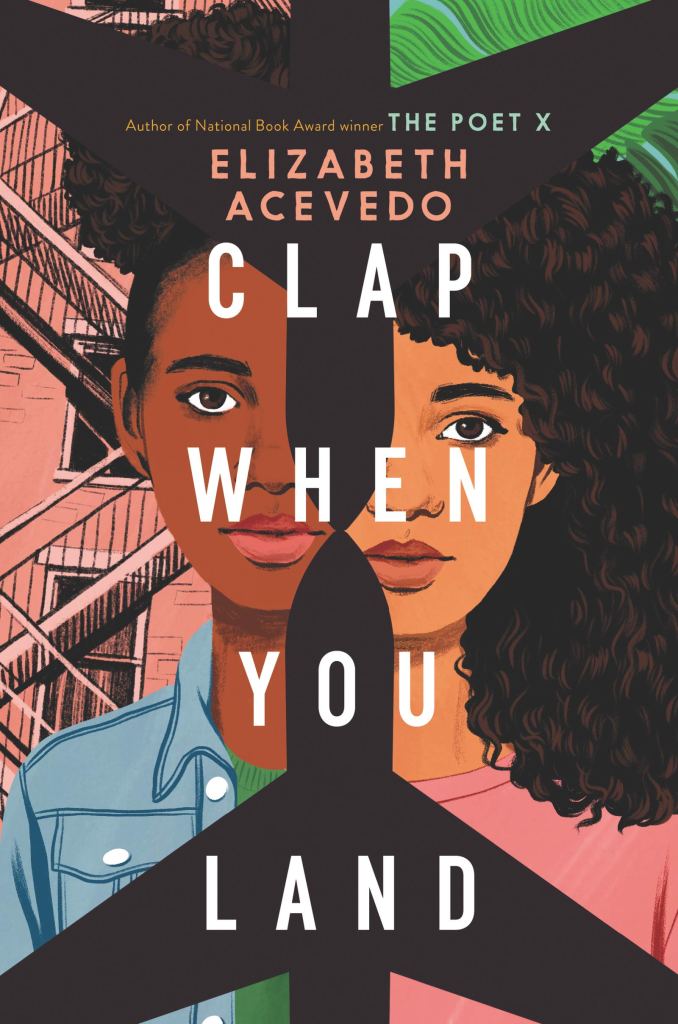
Clap When You Land by Elizabeth Acevedo

Brought together by their father’s death in a plane crash, two sisters must not only grapple with the grief of losing a father, but the realization that their father lived a double life. Feelings of grief and betrayal mash together for a stunning YA novel. For more about this pick, I wrote a review of it back in August of 2021.

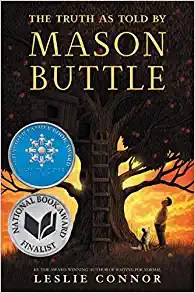
The Truth as Told by Mason Buttle by Leslie Connor

I had the opportunity to listen to this book as an audiobook, and wow. What a wonderful book from the perspective of a boy juggling grief over a friend’s death, a learning disability, bullying, and judgement from his community over a suspected murder. Mason is a charming, positive character, and while the book doesn’t shy away from his hardships, the story demonstrates how grief is a day-by-day process with small improvements and setbacks along the way.

The Thing About Jellyfish by Ali Benjamin

A unique blend of realistic fiction and science writing, The Thing About Jellyfish explores the difficulty of facing death by sudden and tragic circumstances…especially when a last interaction with the person didn’t go positively. Suzy grapples with how her friend, a strong swimmer, could have accidently drowned. Convinced her friend was the victim of a jellyfish sting, she sets out to find the real answers, even when there doesn’t seem to be any.

Long Way Down by Jason Reynolds

After the death of his older brother Shawn, Will is determined to make things right according to “The Rules”. But he spends the next 60 seconds in an elevator with the ghosts of his past, rethinking everything he ever knew.

[SPOILERS AHEAD]

What I adore about this book, as well as so many of my students, is the exploration of generational trauma. The majority of Will’s family members were killed by gun violence, therefore Will feels obligated to keep the tradition of “The Rules”, or killing the person believed to have murdered your loved one. Deciding to avenge Shawn’s death, Will gets on the elevator in his apartment complex. One by one, floor by floor, his dead family and friends reveal secrets to him in the confines of the elevator.

Further Resources on Navigating Child and Teen Grief

Here are some helpful websites and resources for grief tools. Check your local community for grief counseling groups or individualized therapy.

Experiencing Grief as a Teenager | VITAS Healthcare

Helping a Teenager Deal with Grief | What’s Your Grief?

Death and Grief (for Teens) | Nemours KidsHealth

Teaching Tools: 5 Writing Prompts for Macbeth

Photo by Pixabay on Pexels.com

Macbeth is one of my favorite plays to teach. It’s short, but impactful. If you have an interest in teaching your students Macbeth, there are many ways to adapt your curriculum to fit their needs. Many adaptations of the play exist, including the classic text, graphic novels, movies, and more.

First thing’s first: you should have an arsenal of good, open-ended writing prompts for daily journals or short writing assignments. These are especially useful for classes who need immediate “real life” connections to the text. They’re also ready in a pinch if you have to find last-minute materials. I’ve assembled some basic, yet aesthetically-pleasing journal prompts to help guide written discussion. You may be surprised at what students come up with, so don’t forget to let them share their ideas out loud.

Caution: For prompts and other content relating to fortunes and spells, be conscious of your school community’s attitudes towards topics involving the occult. Some families are uncomfortable with anything related to these topics, so have an alternative assignment ready. For journals, tell them they can write on a different topic.

YA Book Review: Clap When You Land by Elizabeth Acevedo

Image Courtesy of HarperCollins

Clap When You Land is a stunning novel-in-verse following two half sisters…who are completely unaware of each other. Well, unaware until their father dies in a plane crash. Then things get complicated.

Those complications make the grieving process significantly harder, though it does take a while for both of the sisters to realize that the other exists. Set in both the Dominican Republic and NYC, Camino and Yahaira Rios are both struck by the tragic loss of their Papi and the secrets he kept from both of his families.

The book explores many topics: grief, secrets, LGBTQ+ relationships, misogyny, colorism, poverty, and so much more. The contrast and parallels of both Camino and Yahaira’s lives make for a fascinating and exciting coming-of-age book.

I listened to the audiobook narrated by the author herself, which brought her novel even more to life and read as intended. Acevedo also does distinct voices for both sisters and includes vibrant imagery in each verse, particularly when it comes to describing the sisters’ relationships or fond memories of their father. I particularly liked the way Camino describes the spiritual healing work her Tía Solana does throughout the book and how she uses her own gifts to help her community.

As for Yahaira, her perspective is similar to the avergage American teen, but what I love about her perspective is that her story often refers to her girlfriend, who is a source of comfort for Yahaira. As she grapples with Papi’s secrets, her girlfriend is there as a steady support system. It’s nice to see a relationship in a YA book well-established and not as a “solution” to grief, but still supportive and key nonetheless. Yahaira also feels guilt throughout the book for her the recent strains on her relationship with Papi, particularly over her quitting chess. I think a lot of kids can relate to feeling pressured to continue doing something for their parents, even if they don’t like it or feeling guilt for not continuing it. This is especially true for Yahaira as she struggles with her identity, like in this quote:

“Can you be from a place
you have never been?

You can find the island stamped all over me,
but what would the island find if I was there?

Can you claim a home that does not know you,
much less claim you as its own?”

From Clap When You Land by Elizabeth Acevedo

I keep revisiting many quotes from Clap When You Land because of their eloquent power, especially when it comes to Yahaira’s perspectives on how the world monetizes death or how Camino references saints and their ancient wisdom. There’s so much more I could gush about, but I’m too afraid to get into spoiler terroritory for the time being. If it wasn’t obvious, go read (or listen) to this book.

Fellow teachers, if you teach a coming-of-age unit, this is an excellent option for that as well.

Books: Authentic Experiences of Disability in Young Adult Literature

Photo by Anna Shvets on Pexels.com

*Note: This piece first appeared in The Handy, Uncapped Pen in 2018.

It may not be hard to find literature featuring characters with disabilities, but it can be difficult to find good literature portraying disabled characters. After all, if society still rampantly promotes ableism, its presence in literature and pop culture are not too far behind. From problematic classics such as Of Mice and Men and Frankenstein to modern books such as Me Before You, the availability of inauthentic experiences with disabilities is unfortunately higher than more accurate portrayals of disabilities. In an effort to promote more diverse and authentic texts about disability, particularly in young adult literature, I wanted to examine three young adult novels featuring protagonists with disabilities: On The Edge of Gone by Corinne Duyvis, Wonderstruck by Brian Selznick, and The Mind’s Eye by K.C. Finn.

On the edge of gone by corinne duyvis

Image Courtesy of Amulet Books

Duyvis’ On The Edge of Gone is an incredibly diverse science fiction piece featuring a main character who is biracial and autistic. In a dystopian society, Denise must prove her own worth to the inhabitants of a generation ship leaving a shattered Earth. The book explores how people are classified as “useful” or “valuable” in society, and people who are disabled or neurodivergent are typically cast aside because they do not possess neurotypical or able-bodied traits. As opposed to many novels with autistic characters, the plot is advanced by actual events or other characters as opposed to the character’s autism.  Instead, Denise must keep track of her mother, who is an addict, and must find her trans sister Iris, all while trying to prove she is worth saving.
       
The author is also autistic, making the authenticity of the experiences Denise has in the book more reliable. But the humility of the author is also key to the novel’s appeal. In an interview with Disability in Kid Lit (2016), Duyvis noted her own tendencies to place autistic tendencies in the novel without a clear explanation of why Denise felt a certain way. On The Edge of Gone is also quick to show that while Denise is autistic and suffers from severe anxiety, she must develop her own coping mechanisms in order to survive.
     
Denise has a decent grip on her coping skills and built-up tolerance to less-than-understanding people in her life, which is why she acts more maturely and sensible than her own mother, who is shown to be selfish and irresponsible on more than one occasion. The beginning of the book (2016) shows her mother wasting the time they have left to get to their pre-approved shelters to stall for Iris as Denise urges for them to leave and get to shelter before it is too late (Duyvis, pg. 10) . When her mother is kicked off of the generation ship, she tries to guilt Denise into smuggling her back on board without taking any time to consider how it puts both Iris and Denise at risk of losing their own resources (Duyvis, 2016, pg. 222) . Denise’s narrative is a much different approach than what many see in books with autistic characters who are often cast as burdens on their families and society. Because of the stigma of autism, Denise has long had to adapt to neurotypical people around her to blend with the world around her.

wonderstruck by brian selznick

Image Courtesy of Scholastic Press

While Duyvis has first-hand experience with living with neurodivergence, many authors attempt to portray disabilities without the same personal experiences or knowledge.  Though Selznick does not have firsthand experience with deafness, he manages to create a very thoughtful literary experience reflecting the lives of people in the deaf community with extensive research. What results is Wonderstruck, a novel and graphic novel cross-over that touches on many important themes and topics: disability, grief, collections, visual aids, and many more. The novel switches between two characters’ stories: Ben and Rose’s. Ben is a boy living in Gunflint Lake, Minnesota in 1977 while Rose is a girl living in Hoboken, New Jersey in 1927. Both characters are deaf and must navigate through a world that does not accommodate their needs, but insists on as much conformity to able-bodied culture as possible. Wonderstruck switches between the 50 year period with two distinct but intertwined stories, both with the same surprising amount of obstacles related to their deafness.
     
Collections are also shown to be a major topic in Wonderstruck. Ben’s mother was a librarian and he keeps old trinkets of hers in a wood-carved box. He carries them around with him, which represents who he is and where he is from without writing or speaking about it. Rose collected pictures and newspaper clippings of her mother in scrapbooks and made many skyscrapers out of paper to bring an inaccessible city directly to her (Selznick, 2011, p. 38-39). Like Ben, Rose uses visual expression and symbols to communicate with others, even when they want her to use a method that is more convenient for someone else. Both Ben and Rose are connected to the Natural History Museum, both through familial ties as well as a shared joy of seeing information presented in a way that is accessible for both of them. Themed exhibits cluster related information and objects together the same way Ben and Rose collect their own information.
   
Wonderstruck does a particularly good job with demonstrating how advancements in technology are not always the best means of assisting people with disabilities. It also features a significant scene where technology sets Rose’s character back. In order to “spend time” with her mother Lillian Mayhew, Rose goes to the movie theater to see her silent films. To Rose’s horror, the movie theater is about to install “Talkie” equipment, which enables movies to be both seen and heard without the supposed interruption of word cards on the screen (Selznick, 2011, p. 142). For people who can hear, this is considered advancement in innovation. To Rose, it is a shocking setback that not only further isolates herself from her absent actress mother, but at chances to enjoy activities that people who are not deaf can as well. Another way Rose is pressured into blending in with people who are not deaf is through lip-reading. Rose hates being pressured into learning how to read lips, and defiantly makes another skyscraper out of her lip-reading curriculum book, a rejection of the standards that people with hearing place on people who are deaf (Selznick, 2011, p. 191). Like Duyvis’ book, Wonderstruck challenges what it truly means to be disabled, demonstrating a wide variety of ways disabled people cope with a lack of accommodations from a young age.

the mind’s eye by k.c. finn

Image Courtesy of Clean Teen Publishing

My quest to find more books similar to Duyvis’ and Selznick’s was harder than expected, even with my specific calls and searches for these type of narratives. I would often find plenty of books featuring characters with disabilities, but were riddled with ableism. Books that had ableist narratives were — surprise, surprise — not written by authors who have first-hand experience with the disability they are writing about. Finally, I found The Mind’s Eye. Labeled as a “paranormal romance”, it stars Kit Cavendish, a girl living in 1940 sent to live in Wales during World War II. Kit possesses telepathic powers but is also a wheelchair-user due to M.E. / C. F. S., a neurological condition that causes pain, fatigue, and sometimes paralysis. Her powers lead her to a boy in Oslo named Henri, who is attempting to escape from Nazi occupation in his village. It is the first book in a series (the SYNSK series) written by UK author K.C. Finn (2017), an author who knows about ableism in young adult literature all too well.
     
“It irritates me when you do find characters with disabilities are there because it’s a gimmick. It’s a hindrance and it is never to their advantage,” she told me. I was pleased to find that Kit’s powers were instead genetic and were in no way connected to her condition. In later chapters, it is revealed both of her parents as well as her brother possess the same telepathic abilities. Finn also does not dwell on Kit’s character for the series, but instead features another member of the family for each book, including her younger brother Leighton. In The Mind’s Eye, we are first introduced to the family’s powers while also witnessing Kit’s grueling rehabilitation process for her paralysis. While Kit’s condition is a large factor in the book, it is not the driving force for the events that happened. Instead, the driving factors were the intelligence she picked up through her telepathy, creating relationships with the rest of her safe house family at Ty Gwyn, and helping Henri escape, and the war itself.
     
When speaking with Finn (2017), she made it clear that the importance of having a strong connection to a disability before writing about it. “When it comes to disability and diversity, the most important thing to me is that when writing about those topics is that comes from somewhere real. It’s best to have real personal experience of the disability or have someone close to you in your life with the condition.” That is what makes finding good narratives on disability difficult; people often want to “help” by writing an inspirational story about someone with a disability without consulting someone who actually has the disability. 

Though all three books featured have protagonists with very different disabilities, all three bring accurate narratives to what having a disability is actually like while maintaining a firm sense of humanity.

Bibliography

Bibliography·         

-Ada Hoffmann, Jessica Walton and Corinne Duyvis. (2016, March 24). Interview with Corinne Duyvis about Otherbound and On the Edge of Gone. Retrieved December 10, 2017, from http://disabilityinkidlit.com/2016/03/24/interview-with-corinne-duyvis-about-otherbound-and-on-the-edge-of-gone/·        

-Duyvis, C. (2016). On the Edge of Gone. New York: Amulet Books.·         

-Finn, K. C. (2017, December 8). Skype Personal Interview.·         

-Finn, K. C. (2015) . The Mind’s Eye. The Colony, TX: Clean Teen Publishing.·         

-Selznick, B. (2011). Wonderstruck. New York: Scholastic Press.


Book Roundup: 4 Books for Reluctant Teen Readers

Photo by Pixabay on Pexels.com

Whether you are a parent, a teacher, or a teen looking for that one book that might actually connect with you, you’ve come to the right place! I’ve already talked a lot about how to find the right book, but if you’re looking for quick suggestions on where to start, I’ve rounded up some of the books I’ve noticed my students who aren’t enthusiastic readers have really connected with in my classroom.

I make no guarantees that you or your students/children will enjoy them, but they do have an impressive track record.

The Selection Series by Keira Cass

For fans of The Bachelor/The Bachelorette, The Selection books are perfect for students looking for a high-stakes romance story. Seriously, these books have it all: choices with major stakes, questioning everything you ever knew, handsome princes, you name it. I had a very hard time finding a copy of the first book for my classroom library due to how popular the books are. Even the used copies were being sold closer to full price than half-off.

The main series is a trilogy, but novellas, prequels, and other books in the Selection universe have also been written. There’s even a coloring book if you need a break from all of the binge reading you’ll be doing.

Long way down by jason reynolds

A novel in verse, Long Way Down by Jason Reynolds is a thrilling, quick read about the consequences of never questioning tradition. In this case, our protagonist Will feels the call to take revenge against the person he thinks killed his brother Shawn only to be confronted by the literal ghosts of his pass. On an elevator. Within a minute’s time. There’s no question why it appeals to so many readers and was a finalist for the National Book Award.

Reynolds’ other books cover many different topics and are written to appeal to young audiences, but also manage to captivate adult readers as well. Don’t lie, you just ordered this book off of Amazon, didn’t you?

Refugee by Alan gratz

Alan Gratz has mastered the juvenile historical fiction genre by giving a thorough background on each historical situation with kids trying to navigate the world around them. Refugee is interesting because of the three different perspectives: Josef in 1930s Germany, Isabel in 1990s Cuba, and Mahmoud in 2010s Syria. All three stories intertwine in a surprising way, but you’ll have to read until the end to find out how.

Gratz’s other books have a very similar setup, but with different time periods. His book Ground Zero is a great choice if you are looking for a book that compares the past and present of the impact of the September 11th attacks.

Speak by laurie halse anderson

When my students read this book, they are shocked that it was published in 1999. The message of the book persists into conversations about the #MeToo movement, but it takes time for readers to unravel the reason why Melinda is hated by people who used to be her friends and why she is convinced no one cares about her voice. For students who prefer graphic novels, this book was adapted into one in 2018. Halse also released her memoir in verse Shout, which mentions the book and her experiences leading up to its creation. All of these books are powerful contemporary classics and are great additions to the classroom.

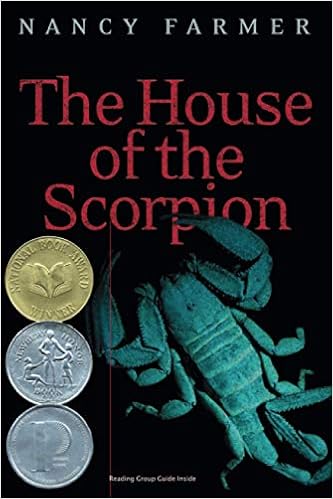
The House of the Scorpio by Nancy Farmer

Another award winner…and for a good reason. Kids and teens still love dystopian worlds, and this has elements of dystopia with real-world questions about the ethics of cloning, class, race, love, and so much more in a sensible and understandable way…without sacrificing an exciting plot. The book follows a cloned boy who is the “son” of a powerful man named El Patrón and his journey to define his place in the world and to escape terrible danger. 

To give you an idea of how the book holds up, I read this when I was in 9th grade and then gave it as an option for my 9th grade students. Nearly all of the students who read the book begged me to order the sequel I didn’t even know had come out until some of them got it from the library or ordered it online. Nancy Farmer truly created another modern YA classic. 

I’m sure there are many other options out there for reluctant readers, so don’t worry if your kid or teen doesn’t seem to connect with any of these choices. It helps narrow down the pool of potential reads they will like!

How Do I Get My Kid to Read? Finding the Right Independent Reading Book for Your Child

A rectangular image of a desk with a stack of books on the left-hand side, a neon green cup of colored pencils, a red alarm clock, reading glasses, with an out-of-focus silhouette of a masculine-presenting child.
Photo by VisionPic .net on Pexels.com

In 2010, Google determined that 129,864,880 books exist on Earth. Think of how many more books exist 11 years later! Feeling dizzy just thinking about it? Thankfully, narrowing down the amount of books by your child’s interests and reading levels is much easier to do.

Still, it can be hard to know where to start. But I promise that while finding the right book for your child can be a long process, it’s not an impossible one. See some of my own techniques for finding books your kid can connect with and finally fall in love with reading.

Find books based on their favorite tv shows

One of the best things about children’s books is that there is probably a book adaptation or even extra stories created just for their favorite media. If your child loves everything to do with Disney, try some books from their Twisted Tales series. The books are retellings of their favorite stories in alternate universes.

Teens may love graphic novels or comic series that were the inspiration for shows such as The Umbrella Academy or Invincible. I’ve found that in recent years, manga has soared in popularity. Manga are graphic novels that are typically multi-volume and is often adapted into anime. While they can be pretty pricey per volume (to be fair, that’s a LOT of drawing to make just one book), the craze has inspired local libraries and other media services to have copies readily available with less wait time (and money saved for you!).

Listen to audiobooks together in the car

Look through descriptions of audiobooks through Audible, Libby, Overdrive, or Hoopla. Choose one that you believe you would like to listen to as a family. That way you can react to the book in real time while also having moments to talk about what you’re listening to. Remember to not force your way through listening to it if it doesn’t appeal to either of you, but especially for your child.

HEad to the library

Libraries are truly amazing places. Free Wi-Fi, classes, and other programs are all available to you and your community at no cost. Well, actually, some of your tax dollars, but hey, that’s all the more reason to go. You prepaid in advance, so take advantage of all it has to offer! Over a billion Americans do it each year, so you’ll be in good company.

When it comes to using the library to help find a good book for your kid, that’s what librarians are for! They have the latest knowledge on new releases and can recommend books for any kind of reader. You can also ask their teachers or school librarians for suggestions as well.

Read Kid Lit Blogs

“Kid Lit” is the affectionate term for children’s literature. They often have posts on the latest books, review of books, and so much more. Blogs by specific grade levels are listed below and I’ll add more as I find them. There’s always something new out there, so if you don’t find what you’re looking for with these blogs, keep checking!

Elementary age book blogs

CeCeLibrarian’s Book Blog

This Picture Book Life

Blazer Tales

Middle grade book blogs

Teachers Who Read

Books in the Middle

Books. Iced Lattes. Blessed.

Young Adult Book Blogs

The YA Shelf

Girl + Book

Inclusive Kids Books Blogs

We Need Diverse Books

Colours of Us

Disability in Kit Lit (no longer posting new blogs, but still a great resource!)

Multicultural Children’s Book Day

Don’t Give Up

I’ve mentioned before that it can be tough to find a book that resonates with some kids. Don’t be afraid to let kids read “below level” if they already have a hard time connecting with books. The more they read, the more words they know, the more books will be accessible to them when the time is right. I can guarantee you that if I didn’t have the foundation of plenty of chapter books, there is no way I would have enjoyed Jane Eyre when it was time to read it.